How Pilke works
Where candidates come from, how sparks build up, and what happens when plans change: the whole loop, in detail.
Before your first invitation
Signing up starts with a phone number and a code by text. After that you give a name, a birthday and a photo.
The personality quiz
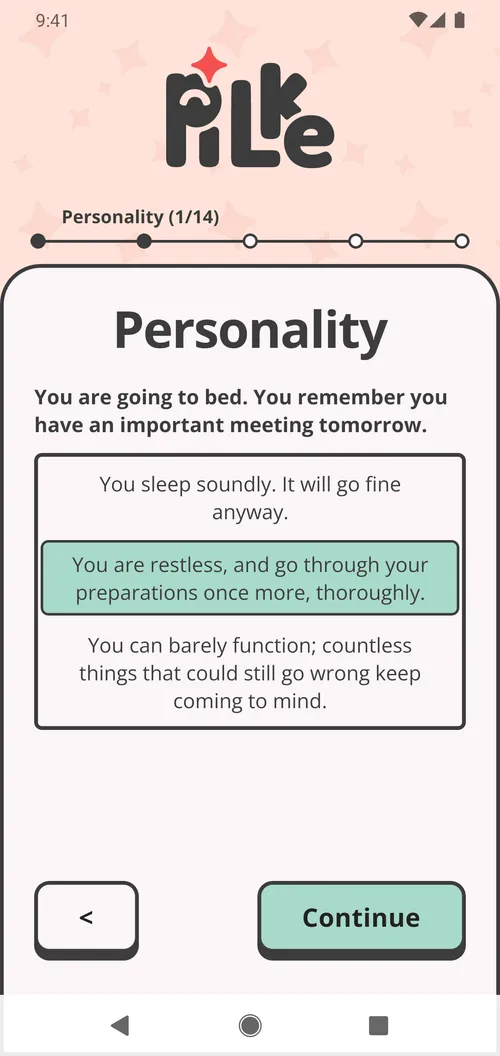
14 little situations where you choose what you would do. Your answers shape the order your candidates are shown in. It goes one question at a time, and you can pick up where you left off. The question sets are there to answer later, at your own pace.
Preferences and calendar
You say who you want to meet, what ages you will consider and what kind of date you are looking for. On a map you choose the areas where you could go on a date. Then you mark the times that suit you. A single slot of 1 hour or more is enough to start.
Where candidates come from
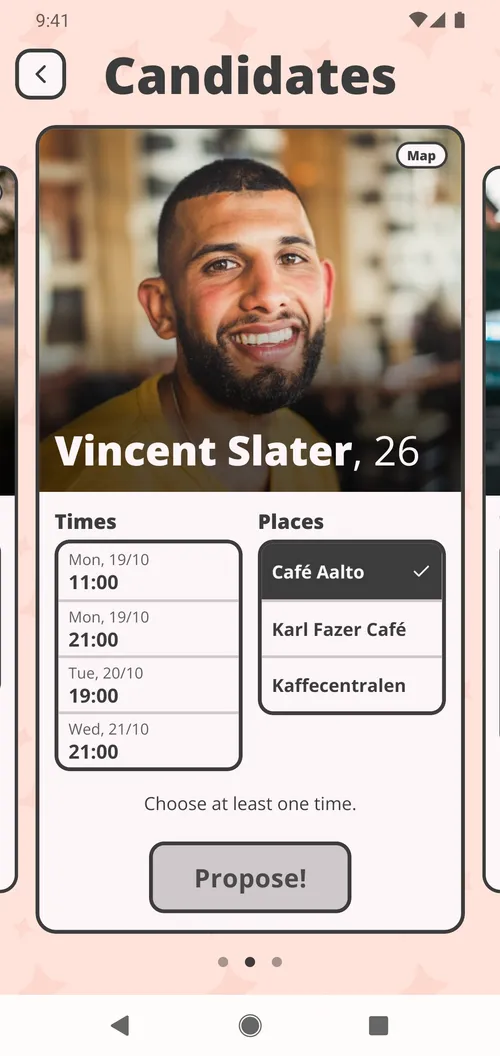
When you find candidates, every one of them meets three conditions: your wishes match, your calendars share at least an hour, and there is a place you can both get to. You choose who the invitation goes to.
The invitation and the answer
You offer the shared times and places on the card that suit you. So that the other person has a choice, an invitation holds at least 2 times or 2 places. They pick one of each, and the date is set. An invitation has to be answered within 24 hours.
Sparks
Pilke runs on sparks. They build up from a calendar kept up to date and from the dates you go on, and they are what you send invitations with.
5 sparks, one date invitation.
How sparks add up
- Welcome sparks5 sparks
- Once, when you confirm your phone number. Enough for your first invitation.
- 10 hours in your calendar, kept for a week1 spark
- Times in the next 14 days count, up to 40 hours at once, so a week brings at most 4 sparks.
- A date you went on2 sparks
- The sparks arrive once you have said how it went. Each of you gets your own.
How sparks are spent
A date invitation takes 5 sparks. They go as soon as you start the invitation, before you choose who to invite. If no suitable candidates can be found, your sparks stay put. You can hold 15 sparks at a time, enough for 3 invitations, and after that new ones wait until you send one. Refunds arrive even when you already have 15.
If plans change
- An invitation goes unanswered for a day
- It lapses by itself and your sparks come back to you. Whoever left it unanswered gets a 12-hour cooldown, during which they cannot find new candidates.
- An invitation is turned down
- Your sparks come back to you. Whoever declined gets a 12-hour cooldown, during which they cannot find new candidates.
- You withdraw your own invitation
- The sparks stay spent, and you get a 12-hour cooldown, during which you cannot find new candidates.
- An agreed date is called off
- You can, but it is rude to the other person: they have set time aside for you. Calling it off brings a cooldown, during which you do not appear among other people’s candidates and cannot find new ones. The closer the date and the more often you call dates off, the longer it lasts. If the person invited calls it off, the sender gets their sparks back.
Why there is no chat
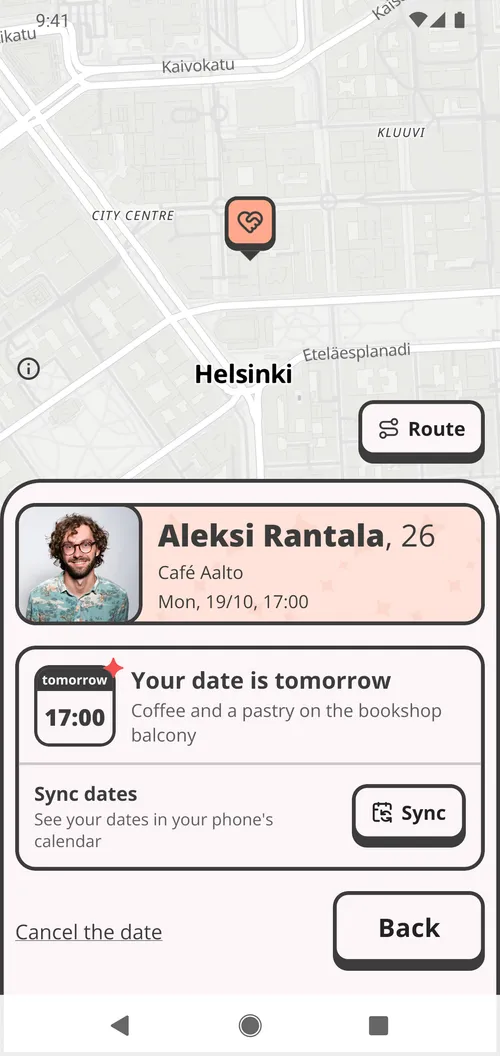
Chatting in an app is really just an unnecessary ritual before the date, which is where you actually get to meet and talk. Pilke skips straight to the good part: the invitation already has the time and the place, and the talking starts at the same table. On the day, the map shows where the other person is, so you find each other without messaging.